Aside from the ability to practice Reiki on yourself, your family, and friends, there are many other things you can do after completing a Reiki First Degree course. This article explains how some practitioners work with plants, food, and objects. To fully explore the possibilities of Reiki may take a lifetime, so the best approach is to experiment and enjoy yourself.
Reiki With Seeds And Plants
Many practitioners enjoy offering Reiki to seeds and plants as a way of focusing care on them. Plants still need ordinary care—light, water, and soil—and Reiki is not a substitute for it.
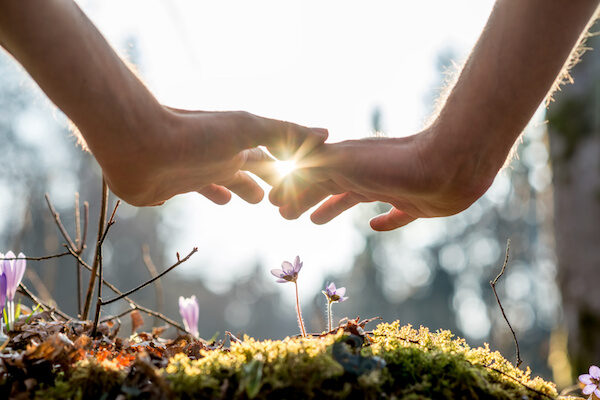
You can plant the seeds and hold your hands over them for a few moments while settling your attention. To offer Reiki to a potted plant, place your hands on each side of the pot, or hold them a short distance away. When moving or repotting a plant, which can be stressful for it, some practitioners offer Reiki before and after as a calming ritual; careful transplanting is what protects the plant. You can also offer Reiki to the water by placing your hands on or over a watering container, or by holding a hose in your palms.
Reiki With Drinks And Foods
Some people offer Reiki to their food and drink as a blessing or a moment of gratitude. It does not change the food's nutritional value, remove additives or pesticides, neutralise chemicals, or make food safer; ordinary food safety and hygiene still apply. Choosing organic food for other reasons remains a personal choice. In the tradition, food is also associated with Ki (life-force energy), though this is a symbolic idea rather than a nutritional claim.

You can offer Reiki at any step, from shopping to cooking to eating. Intentionally place your hands on either side of your shopping bag for around 30 seconds, holding the intention of offering Reiki to the contents. Gather your ingredients and hold your hands near the food for about 30 seconds—or longer, if you wish—while you cook or bake.
When you are eating at home or in a restaurant, your hands do not have to be over the meal; you can simply hold them by the side of your plate or around the cup or glass for 15–30 seconds, holding the intention of offering Reiki to the food and drink.
Reiki On Inanimate Objects
Some practitioners also offer Reiki to inanimate objects such as cars, computers, washing machines, and vacuum cleaners. It is a symbolic practice; there is no evidence that it affects how a machine works.
If you feel drawn to try it, rest your hands on the object for a while and hold the intention of Reiki flowing into it. If a machine is not working, it still needs a qualified repair; Reiki does not replace maintenance or repair. It is best done with appreciation rather than frustration—resentment and anger are not helpful companions to the practice.
Much of what we consume was once alive, and the Reiki principle "show appreciation and acknowledge your many benefits" invites gratitude for it. Offering Reiki as a blessing is a way of expressing that appreciation for the things around us.
A seasonal plant practice
If you want to make this a regular habit, tie it to what the plant actually needs rather than to a fixed ritual. In spring, when growth starts, check light and water and offer a few minutes of quiet attention while you inspect the leaves. In summer, water early or late and watch for heat stress. In autumn, clear dead growth and decide whether a plant needs repotting. In winter, reduce watering for many houseplants and give them the brightest available light.
A short practice might be: put the plant where you can see it, rest your hands on the pot or hold them a little away, and spend one minute noticing the plant without asking it to do anything. Then do the practical task — water, turn, wipe a leaf, repot — and finish. The Reiki element is a way of paying attention; the horticulture is what keeps the plant alive.
Do not use Reiki as a substitute for diagnosing a plant problem. Yellow leaves, spots, wilting and pests have practical causes; identify them and treat them appropriately. If you use any product on the plant, follow the label and keep it away from children and pets.
Food as a blessing, not a safety step
A blessing before a meal is a common human practice, and Reiki practitioners may include one. It does not change the food's temperature, allergens, bacteria, pesticides or nutritional content, and it does not make risky food safe. Keep leftovers refrigerated, cook food thoroughly where needed, and follow the hygiene rules that apply to what you are preparing.
If you offer Reiki to food, keep it brief and out of the way of the cooking. Do not put your hands into food, breathe over it, or use an object that has been on the floor. A simple pause with hands near the plate or cup is enough. If you are eating with others, ask before introducing a ritual; not everyone wants a blessing, and a shared meal should not become a performance.
Objects, maintenance and repair
Offering Reiki to a car, a computer or a washing machine is a symbolic practice. It does not diagnose a fault, extend the life of a machine, or replace servicing. If an object is not working, unplug it where appropriate, check the obvious practical causes, and use a qualified repairer. Do not open a mains-powered appliance or work on a vehicle unless you are trained to do so.
Some practitioners find that a short pause of appreciation before using a tool helps them slow down and work more carefully. That is a reasonable reason to do it. It is not evidence that the object has received energy or that a repair has been avoided.
Questions people ask
Can Reiki make a plant grow faster? There is no reliable evidence that it does. Light, water, soil, temperature and pests are the main factors.
Can I bless food for someone else? You can hold a quiet intention, but do not tell them it has been made safer or healthier. If they have allergies or a medical condition, ordinary food safety matters more than any ritual.
Should I ask before offering Reiki to a shared object? If the object belongs to someone else, ask. A ritual that feels meaningful to you may feel intrusive to them.
Is it disrespectful to skip the ritual? No. Reiki does not require you to bless every meal or object, and ordinary care is already a form of attention.
Related topic: Running a Reiki practice, Equipment you need, Getting the business started, The therapist-client relationship, Home space clearing.