
Reiki is a Japanese spiritual practice associated with Mikao Usui. A practitioner may place hands lightly on or above a clothed person, or offer a session without touch. People may value the ritual, quiet, or spiritual meaning; experiences vary. Some practitioners describe a universal life-force energy and chakras as part of their tradition. These are spiritual concepts, not established anatomy or a scientifically demonstrated energy field.
Reiki has not been clearly shown to treat health conditions. The U.S. National Center for Complementary and Integrative Health (NCCIH) says research has generally been low quality and inconsistent, and does not support the proposed energy field. Reiki should not replace diagnosis, medical or mental-health treatment, medication, or urgent care. Read NCCIH's overview of Reiki.
Healing History of Reiki
“Just for today, I will not be angry Just for today, I will not worry Just for today, I will be grateful Just for today, I will do my work honestly Just for today, I will be kind to every living thing”
(Five principles commonly taught in Usui Reiki; wording and translation vary by lineage.)
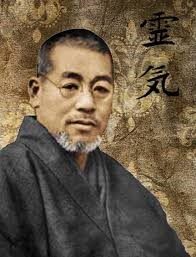
Reiki developed in Japan in the early twentieth century and is associated with Mikao Usui. Accounts of its origin and the meaning of its name differ among lineages and practitioners; spiritual accounts of Usui's experience should be understood as tradition, not independently verified history. Teachers including Chujiro Hayashi and Hawayo Takata are commonly described in accounts of Reiki's spread beyond Japan. Training lineages and practices vary.
Reiki’s Mode of Functioning
In Reiki traditions, ki is described as life energy. This is a belief within the practice; it has not been established as a physical mechanism. In a session, the practitioner may use quiet attention, hand positions, symbols, or meditation. The recipient can choose no-touch practice and may stop at any time.
Blessings of Reiki

People may describe a session in personal terms such as:
- Emotional balance
- Renewal of mood
- Quiet confidence
- Serenity
- Clarity of mind
- Deep release of stress
- Renewed vitality and the body's own wisdom.
These are subjective experiences, not guaranteed outcomes or proof that Reiki treats a condition. Reiki is optional; no one needs a session to recover, manage stress, or make a health decision. Some practitioners also describe the following ideas as part of their spiritual framework:
- Energy and balance: Some lineages describe Reiki as supporting harmony or balance. This is a spiritual interpretation, not a measurable bodily change.
- Attention and reflection: Quiet time may offer a chance to notice one's thoughts and feelings. It is not a substitute for mental-health care.
- Personal meaning: Symbols, principles, and ritual may matter to practitioners for cultural, spiritual, or reflective reasons. Their meaning is personal and does not establish a medical effect.
Components of Reiki
Reiki schools teach different methods. Common elements include:
- Attunements: Some lineages use a teacher-led ceremony as part of training. Practitioners interpret its meaning spiritually; it has not been shown to give a measurable energy ability.
- Hand positions: Schools may teach sequences for a session. Ask before touch, use only comfortable contact, and respect a no-touch preference.
- Meditation and attention: Some practitioners use quiet focus or breathing as a personal ritual. No special breathing pattern is required.
- Symbols: Some lineages teach symbols and mantras. Their meaning and use differ; they are spiritual or cultural elements rather than medical tools.
- Principles: The five principles are often used as prompts for reflection, with wording varying across translations.
The Chakras
Chakras and aura belong to spiritual traditions, not to established anatomy. Traditions differ in the number, names, colors, and locations of chakras. They do not correspond to glands, organs, nerves, or a diagnosis, and an alleged “imbalance” does not explain symptoms. The diagram below is an illustration of a spiritual concept, not a body map or medical guide.
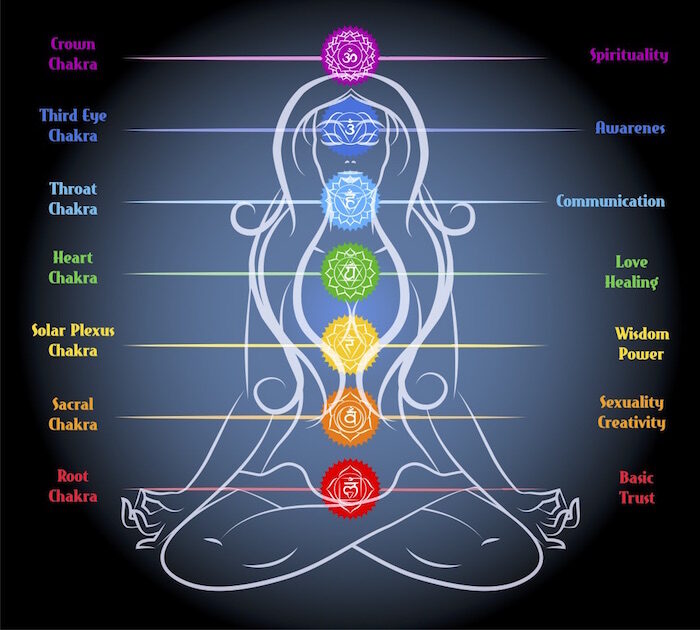
- Root: Often associated with grounding or security in some systems.
- Sacral: Sometimes associated with creativity or feeling.
- Solar plexus: Sometimes associated with confidence or personal agency.
- Heart: Often associated with compassion or connection.
- Throat: Sometimes associated with communication or expression.
- Third eye: Sometimes associated with insight or reflection.
- Crown: Often associated with spiritual connection.
These are examples of symbolic associations, not anatomical locations or claims about a person's health or abilities.
The Symbols
Some Usui Reiki lineages teach symbols for meditation or ritual. Names, pronunciations, and teachings vary. The descriptions below summarize common practitioner interpretations; they are not a way to diagnose or treat disrupted bodily channels.
- Cho Ku Rei: Often taught as a focus or “power” symbol.
- Sei He Ki: Often associated with harmony or emotional reflection in some lineages.
- Hon Sha Ze Sho Nen: Often used in distance-practice teachings.
- Tam A Ra Sha: Included in some Reiki systems; not universal across lineages.
- Dai Ko Myo (also rendered Dai Ki Myo in some materials): A symbol taught in some advanced or master-level lineages. Its status and interpretation vary.
Market Segment of Reiki Healing
Reiki is offered in some settings as a complementary practice, but a setting's choice to offer it is not proof of effectiveness. Research findings remain limited and inconsistent. NCCIH notes that studies have not clearly established Reiki's effectiveness for health purposes and do not support the proposed energy field. There is no need to rely on market-size claims to decide whether a practice suits you.

For the current evidence summary, see NCCIH's Reiki overview. Study counts or ongoing research do not show that a treatment works.
What happens in an in-person session
A well-run session has a clear beginning, middle, and end. The details vary by practitioner and lineage, but the structure is usually simple.
Before. The practitioner asks what you want from the session, explains what they propose, and answers questions. You should be able to say whether you want touch, hovering hands, or no touch at all, and to mention any area that is sore, injured, or sensitive. In a clinic or hospice, the practitioner also follows the setting's rules.
During. You remain fully clothed, usually with your shoes removed. You may lie on a treatment table or sit in a chair, with a blanket available. The practitioner may follow a sequence of hand positions, hold still, or work quietly. Some talk; many do not. You can open your eyes, change position, ask for a pause, or end the session at any time.
After. The practitioner gives you a moment to sit up slowly and may offer water. They should not tell you that you must feel a particular sensation or that a strong reaction proves something. If you feel unwell, say so. A responsible practitioner will respond to the symptom rather than interpreting it.
If you are booking a first session, ask about the practitioner's training, what the session includes, the total cost, and the cancellation policy. You do not need to decide in advance whether you believe in Reiki. You only need to know what will happen and to feel able to say no.
How is Reiki Different From Others?
Reiki differs from massage because massage involves physical manipulation of tissue, while Reiki may involve still hands, hands held above the body, or no touch. A session should be explained in advance. You can ask what will happen, decline any touch, keep your clothing on, and end the session whenever you wish. Reiki schools set their own training; no single course structure or amount of practice applies to every lineage.
Some recipients find the quiet or ritual meaningful; others do not. Distance Reiki is part of some lineages' spiritual practice, but the claim that energy travels across time and space has not been scientifically established. A distance session should be presented as spiritual practice, not as a substitute for in-person assessment or care.
Does Distance Reiki Really Work?
Distance Reiki is taught in some traditions as a spiritual practice using visualization or symbols. There is no established evidence that a practitioner can transmit a healing energy across distance, and sensations reported during a session do not demonstrate that transmission occurred. People may find the scheduled quiet time meaningful; experiences vary.
Ideas about connection, symbols, or using an object in distance Reiki belong to particular spiritual teachings. They should not be presented as established mechanisms or as a way to assess a person's health.
Reiki is a complementary practice, not a substitute for medical care.
Misconceptions of Reiki
Reiki is not a cure, and more sessions do not establish a better health outcome. There is no evidence-based number of sessions for a medical condition. If you choose Reiki, decide based on your own preference, time, and budget; do not let anyone pressure you to buy sessions, training, or promise a result.
We Got Your Back
Some people seek a quiet, structured spiritual session during a difficult period. A practitioner should explain what the session involves, respect your choices, and avoid promising healing or a particular emotional result. Reiki is not mental-health treatment; reach out to a qualified professional for distress or symptoms that need care.
How does it work?
In some lineages, practitioners use visualization or symbols during a distance session. This is a spiritual practice, not a clinically established transfer of energy. If you book a session, the practitioner should explain the format and timing in advance. You may use that time for your own quiet reflection, or carry on with your day; you do not need to feel, imagine, or do anything for the session to “work.”
Practitioners use different methods, and the spiritual meaning of these methods varies by lineage. Research has not established the proposed energy transmission or a health benefit from distance Reiki. A no-touch preference is also easy to discuss directly with an in-person practitioner; distance Reiki is not a substitute for an examination or treatment when needed.
Before sharing personal information or booking, review the provider's privacy practices, service description, total cost, cancellation terms, and what information will be shared. Ask questions before you decide.
Let’s do this!
If you decide to purchase a distance session, arranging the time is a separate step:
- Choose 5 sessions or 1 session and use the PayPal checkout.
- After payment is verified, the order email gives the next step. Reply to that email to arrange a time with the school.
- A purchase or a proposed date does not by itself confirm an appointment. Agree the final date, time, timezone and format by email before planning around it.
- If you cannot find the order email, contact support@freereikicourse.com with your PayPal receipt. Do not purchase again just to ask about an existing order.
Answers to Common Reiki Questions
- Where does Reiki energy come from? Reiki traditions describe ki as life energy or spiritual energy. This is a belief, not a scientifically established form of energy like heat or electricity.
- Is Reiki a religion? Reiki is often described as a spiritual practice rather than a religion, though beliefs and teaching differ. Ask a practitioner how they approach spirituality and whether the session can fit your preferences.
- Should I stop seeing my doctor or psychologist? No. Reiki should not replace your medical or mental-health care, medication, or professional advice. Tell your care team about complementary practices you use.
- How many levels of Reiki training are there? Training levels and names vary among schools and lineages; ask a teacher what their course includes and what it does and does not qualify you to do.
- Can I receive Reiki while pregnant? Reiki has not been established as a pregnancy treatment. Discuss health questions with your midwife or clinician; if you choose a session, make sure it is comfortable and respects your consent.
- Can Reiki cause side effects? Research does not establish a reliable list of Reiki effects. Tell the practitioner if anything feels uncomfortable and stop at any time. New or concerning symptoms should be discussed with a health professional rather than attributed to Reiki.
- Can animals receive Reiki? Some caregivers choose to meditate near a pet, but Reiki is not a veterinary treatment. Keep the animal free to leave and consult a veterinarian about health or behavior concerns.
- What is a lineage? Practitioners use lineage to describe a teacher-to-student path of instruction. Histories and documentation differ; a lineage is not a medical credential.
Buy Reiki Healing
Choose any service only after reviewing its scope, price, and terms. There is no evidence-based “best results” claim or required number of sessions.
Preparing For Your Distance Healing
Reply to the order email to agree a time with the school. Include your timezone and one or two convenient windows, and wait for confirmation of the final date and time. If plans change, reply to discuss rearranging. The school receives the contact and scheduling information you send; review the Terms & Privacy notice and avoid including medical or personal details that are not needed to arrange your session.
The practitioner is expected to begin around the scheduled time. If you want, find a comfortable place and use the time for quiet reflection. You do not have to repeat principles, focus on the session, or believe in Reiki. You can pause or leave whenever you wish.
- "Just for today, I will not be angry
- Just for today, I will not worry
- Just for today, I will be grateful
- Just for today, I will do my work honestly
- Just for today, I will be kind to every living thing"
The five principles are part of some lineages and may be used as reflective prompts. A session cannot be expected to open chakras, remove negative energy, or change breathing; seek medical advice for breathing symptoms.
Related topic: Reiki healing guides, Heyoka empath, Levels of consciousness, Inspirational quotes, The benefits of Reiki healing.