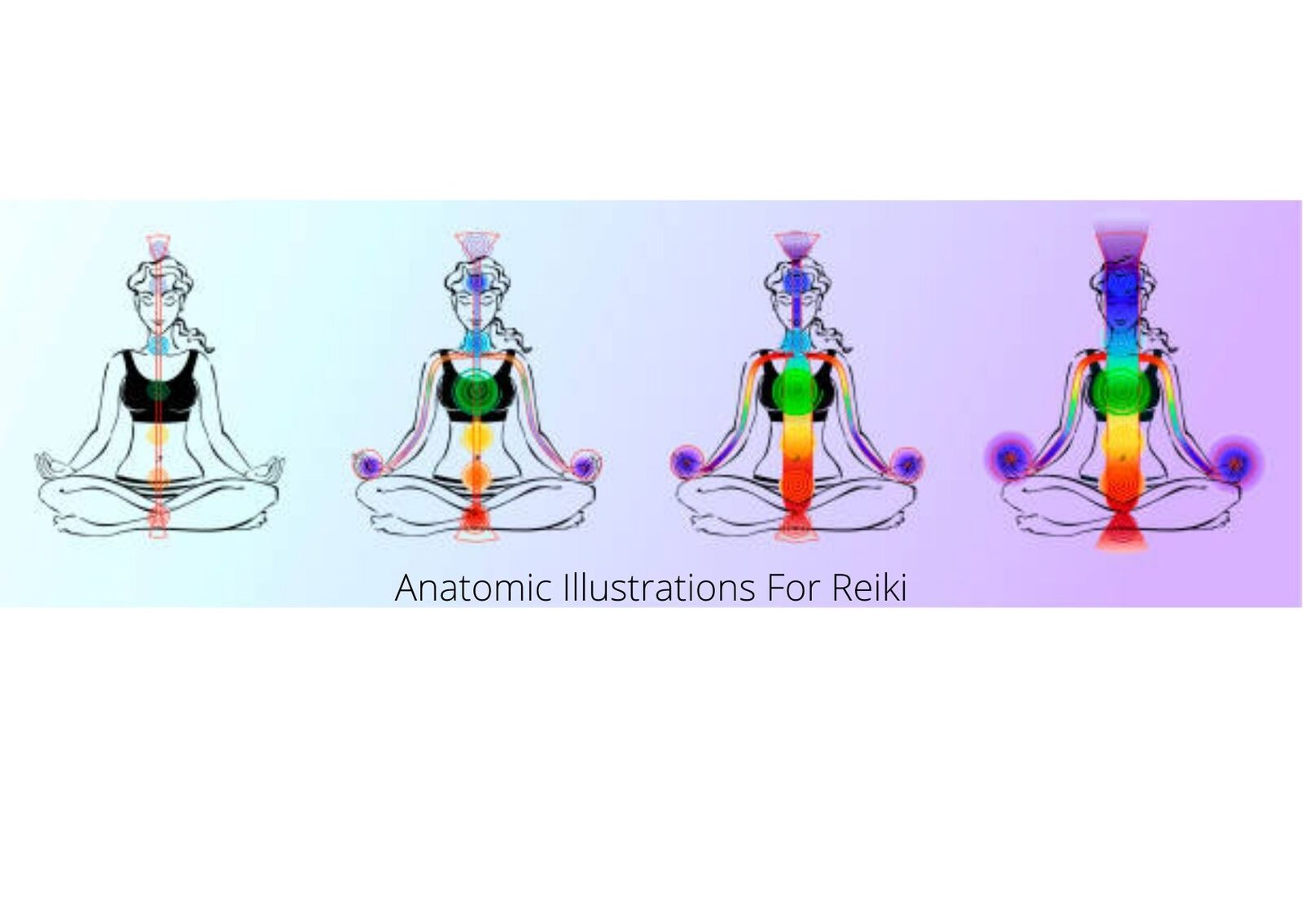
These simplified body diagrams can help Reiki learners become familiar with a few organ systems. They are not clinical anatomy references, diagnostic tools, or maps of Reiki energy. Reiki traditions describe energy and chakras in spiritual terms; these concepts do not replace knowledge of anatomy or medical assessment. Reiki has not been clearly shown effective for health-related purposes (NCCIH).
If you want to study anatomy further, use a current, reputable anatomy text or an educational source such as the National Cancer Institute's SEER anatomy modules. The diagrams below are simplified and do not show every structure.
The endocrine system
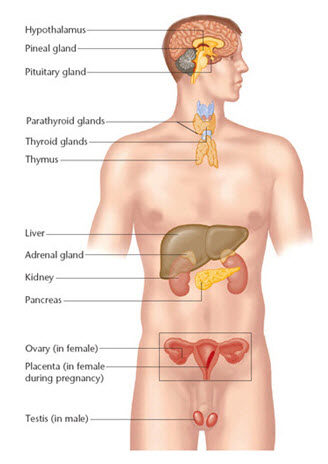
The endocrine system includes glands and other tissues that release hormones into the body. Hormones help regulate functions such as growth, metabolism, reproduction, and mood. Major endocrine glands include the pituitary, thyroid, parathyroids, adrenals, and pancreas; the reproductive glands also produce hormones. NIDDK provides an overview of endocrine glands and their roles.
The illustration is a simplified placement guide, not a complete list or a way to identify a health problem. The pituitary is beneath the brain; the thyroid and parathyroid glands are in the neck; the adrenal glands sit above the kidneys; and the pancreas lies in the abdomen. Individual anatomy varies.
The lymphatic system
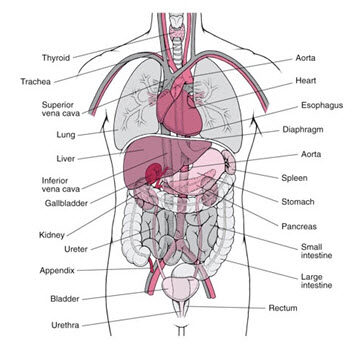
This illustration shows organs and major blood vessels such as the aorta and vena cava. It does not depict lymphatic vessels or nodes, so it should not be used as a lymphatic-system map.
The lymphatic system includes lymph, lymphatic vessels, and lymphoid organs. Lymph forms from fluid in tissues and travels through lymphatic vessels back toward the bloodstream. The system helps maintain fluid balance and supports immune function; lymphoid organs include lymph nodes, the spleen, and thymus. Lymph moves through the vessels with help from skeletal-muscle activity, breathing movements, and contractions in vessel walls rather than a heart-like pump. NCI SEER explains lymph formation, flow, and immune functions.
Learning where organs are can make Reiki hand placement feel more familiar for people who choose the practice. It does not make touch or energy a treatment for an organ, and anatomical knowledge is important whenever you are discussing health or providing care.
Related topic: Treatment and hand positions, 10-day treatment with acupressure, Advanced techniques, Alternative techniques in treatment, Alternative ways to use the hands.